
Product
RF20A: a solar handset with no battery, and why it is still a concept
Published 2026-11-02 · Product · 4 min read
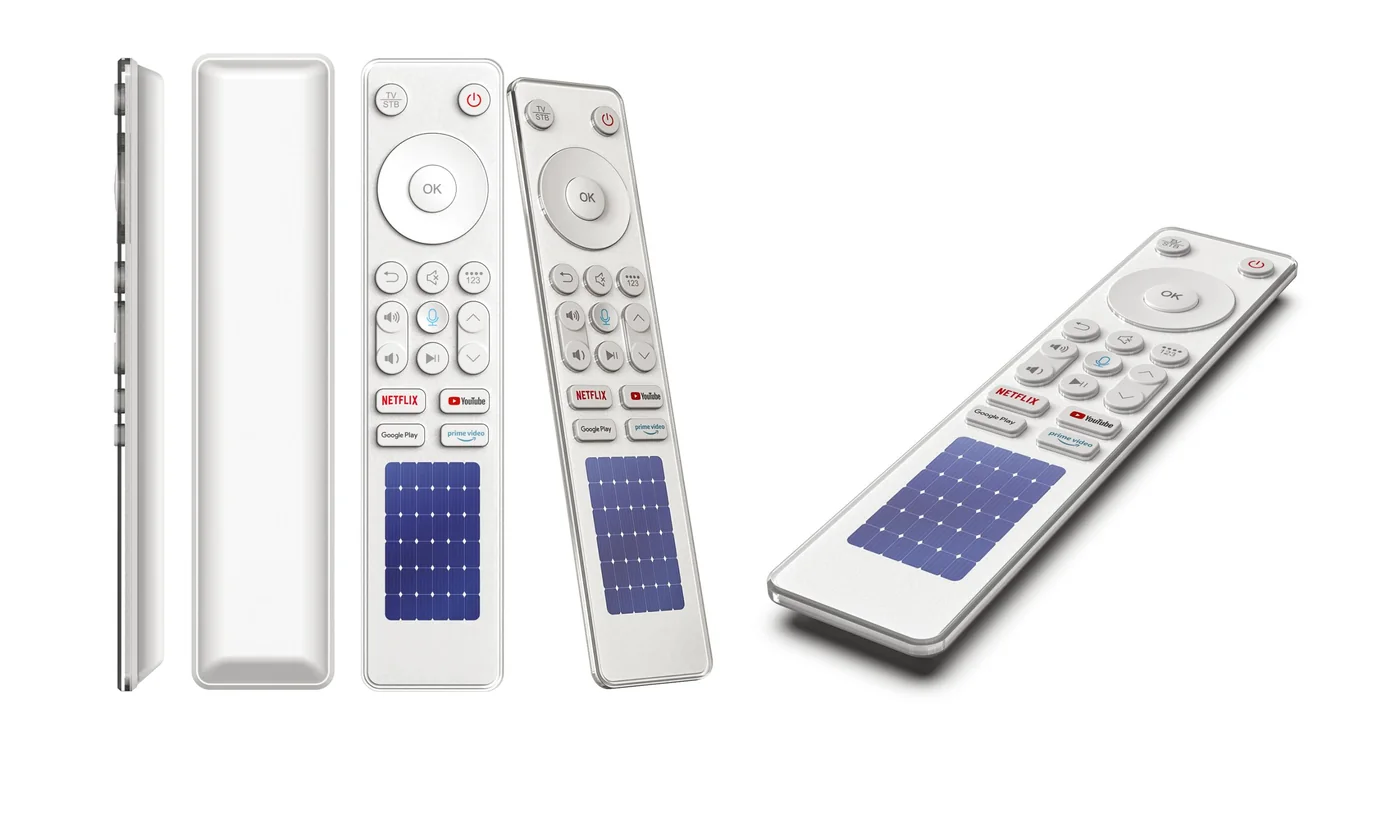
The RF20A began with a simple brief: remove the battery from a remote that is used every day. The result is a working concept, not a product on a shelf.
The case for no battery
In a hotel or a rental property, the battery is a service cost. Someone has to notice the handset is failing, find the right cells, open the compartment and test the room. A handset that harvests light removes that visit. It also removes the battery door, the contacts and part of the sealing problem.
What is inside
RF20A uses a BLE 5.2 SoC and a solar surface. The handset measures 180 × 37 × 10 mm. Factory-declared distances are RF ≥15 m, IR ≥8 m and voice ≥10 m. Those figures describe the reference build; they are not a guarantee for a different housing or a different room.
What “factory-declared” means
Factory-declared figures come from the reference build measured in our own test environment. They describe what that build did, not what every unit will do in every room. A different housing, a different antenna position or a different glass can move the number. For a production program the figures are re-measured on the final configuration and written into the report.
Buyers should treat the difference as normal. A supplier who quotes a range without saying which build it came from has given a marketing number, not a specification.
Why it is still a concept
Indoor light is not a specification. A room with a large window and a room with a heavy curtain do not deliver the same energy, and a handset that works on a desk may not recover in a dark hotel room. The energy budget also has to cover voice wake and IR bursts, not just standby. Until those behaviors are characterized across real rooms, the handset stays a concept and is not offered for mass production.
What a production version needs
A production program would start with an energy budget, a storage-life target and a low-light test plan. The housing and key map would follow, then certification for the target markets. None of that is unusual; it is simply work that has not been done for this concept yet.
The test plan would define room profiles — window size, curtain, lamp type — then run a usage cycle and a storage period and record recovery time. Without those profiles, a solar handset can pass a lab test and still fail in the room it was bought for. Defining them is part of the production work, not the concept.
Where it fits
The first fit is a room where the handset sits in daylight and a service visit is expensive: hospitality, serviced apartments and some care environments. It is a poor fit for a handset kept in a drawer or used mainly at night. That is a product decision, not a technical one.
Concept figures are factory-declared values for the reference build. Production configuration is confirmed separately.
More from the newsroom
Keep reading.
Three other notes from the same team.
Start a project
Send the control target, not a catalogue request.
Tell us what the remote has to control, which radio the installed base uses, and where it ships. We will reply with the questions that decide the architecture.