
Product
36A: single-channel voice plus a Bosch light sensor
Published 2026-11-02 · Product · 4 min read
Voice control usually arrives with a microphone array, a far-field algorithm and a power budget that changes the whole handset. The 36A takes a narrower route: one voice channel, a light sensor and a conventional two-cell housing.
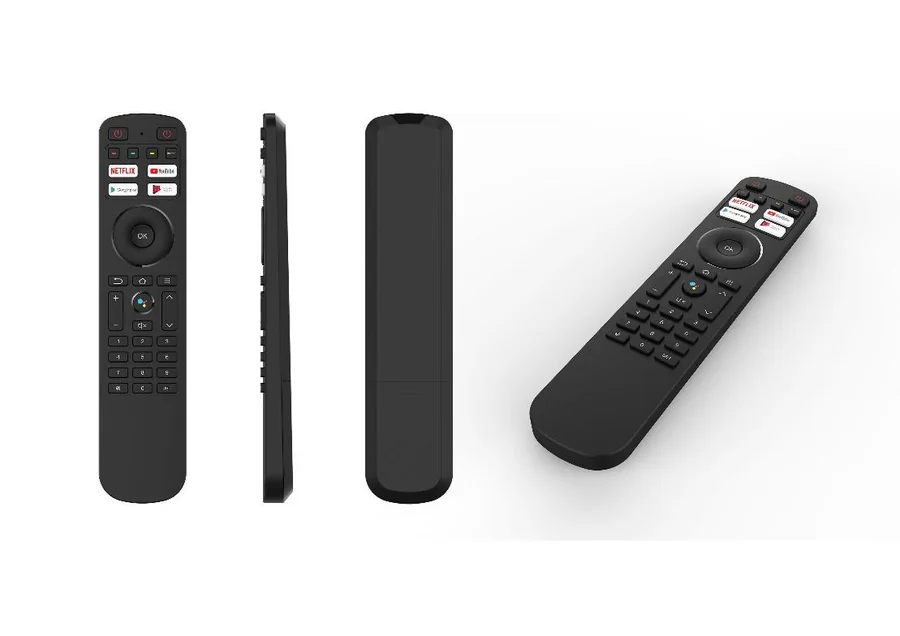
Single-channel voice
36A uses a Realtek/Actions platform with a single voice channel. It is designed for fixed commands rather than open-ended conversation. That keeps the bill of materials and the power budget closer to a standard BLE handset, and it makes the voice behavior easier to test: the command set is known, and the failure modes are limited.
The light sensor
A Bosch ambient-light sensor controls the backlight. In a bright room the legends stay unlit; in a dark room the handset lights the keys it needs. The sensor is not a gimmick. Backlight is one of the largest continuous loads in a handset, and switching it off when it is not needed extends the two AAA cells.
How the voice path is tested
A fixed command set makes the test plan shorter. Each command is recorded in a quiet room and in a room with a television playing, at the distance the handset is expected to be used. The result is a table of commands and conditions, not a single accuracy figure. When a command fails, the table shows whether the microphone, the key press or the service link was responsible.
That table is also the handover document. A customer who adds a command later can see which conditions were already covered and which need a new run.
Where it fits
The natural fit is a living room or a hotel room where the handset controls a TV and a set-top box, and the voice command set is short: power, volume, channel, input. It is not a far-field speaker remote, and it is not intended to replace a smart speaker. The value is a familiar handset with a voice key that works without a new charging routine.
Status and limits
36A is a concept. It measures 185 × 40 × 15 mm, uses 2× AAA cells and carries a factory-declared range of ≥15 m. A production version would fix the command set, the wake behavior and the voice service integration with the customer. Those choices change the firmware and the test plan, so the concept is a starting point rather than a catalogue item.
What a buyer should ask
Ask which commands run on-device and which need the cloud, how the handset wakes, and what happens when the voice service is unavailable. The answers decide whether the product feels like a remote with a voice key or a voice product with keys.
The split also decides the test plan. On-device commands can be verified against a fixed table in the lab; cloud commands need a service endpoint and a defined failure mode. A buyer who has not chosen the split should expect the schedule to wait for that decision.
Concept figures are factory-declared values for the reference build. Production configuration is confirmed separately.
More from the newsroom
Keep reading.
Three other notes from the same team.
Start a project
Send the control target, not a catalogue request.
Tell us what the remote has to control, which radio the installed base uses, and where it ships. We will reply with the questions that decide the architecture.