
Why do hotel remotes fail — a 240-room refit log, two years on
Published 2026-11-20 · 5 min read
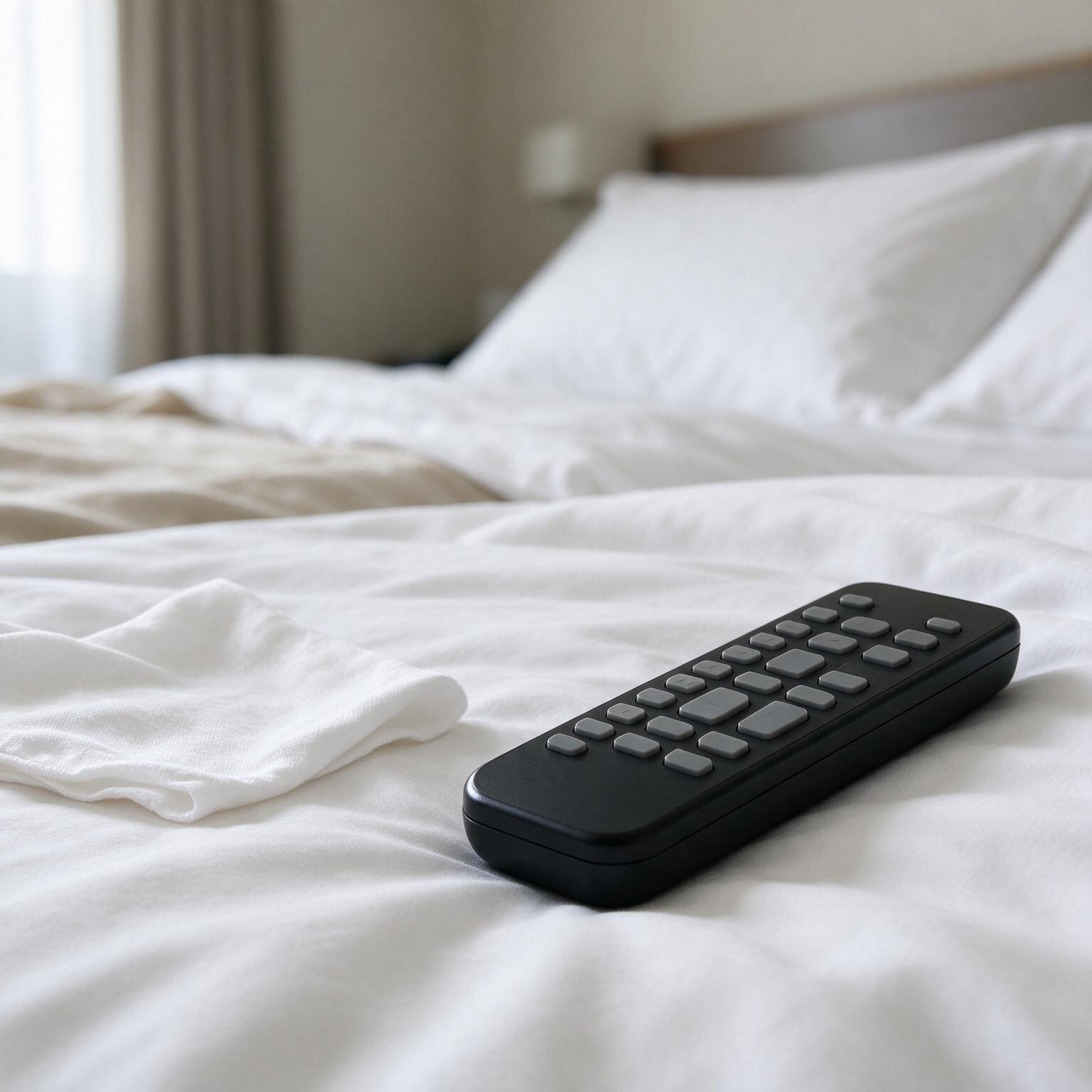
Start with a number: how many callouts per 100 rooms per month is your remote problem actually generating? If nobody can put a figure on it, the rest of this article is theory. Take a 240-room city hotel, mid-market brand, nine floors, refitted two years ago. It had already replaced its remotes once, at around 18 months. That second replacement is what triggered the work below.
Context: a 240-room city hotel, two years into a refit
Two hundred and forty rooms over nine floors. Mid-market — not luxury, not budget. The refit two years ago covered soft goods and in-room electronics in a single pass, and that detail matters. The remotes were bought as a line item inside the package, not specified as hardware in their own right. Once the fit-out team left, nobody owned the decision. Serow supplied the replacement hardware. The figures in this piece come from the hotel's own records, shared with us for this write-up.
That first set had already been replaced once, at roughly 18 months. Short life for something a guest touches for maybe 30 seconds at a time. Nine floors also means nine housekeeping routes, and a remote that fails on the top floor costs the same callout as one that fails beside the lift lobby.
How bad it was, in numbers rather than adjectives
The operator measured the baseline before changing anything, and shared the numbers with us. Three figures came out of it:
| Metric | Baseline |
|---|---|
| Remote-related callouts, per 100 rooms per month | 11–12 |
| Front-desk complaints attributable to the remote | Roughly 20% of all in-room complaints |
| Remotes written off as missing, per year | Around 15% of the installed fleet |
The hotel is not named at its request. The figures are drawn from its maintenance ticket system and its monthly front-desk complaint logs, covering the 24 months after the change and compared against the 12 months before it.
Two things in that table are worth pausing on. The callout figure only counts tickets someone logged — a guest who cannot change the channel and gives up never appears anywhere. And the missing-remote figure behaves differently from the broken one. Broken remotes come back to the front desk. Missing ones simply stop existing, and the room gets a spare until the spares run out.
The complaint share is what pushed the project forward. When around one in five in-room complaints lands on a plastic handset, operations teams notice, because the remote is not what the hotel sells. The bed, the shower, the quiet — that is what the guest paid for. A failed remote is a complaint with no upside.
What was actually done: four actions, four reasons
1. Sealed membrane keypad, no battery door
The original remotes had a slide-off battery door and a rubber keypad over a contact sheet. Both fail predictably. The door gets lost, then the cells get swapped in wrong, then the contacts corrode. Liquid finishes the job: a glass of water on the bedside table, a wet hand, a spill that reaches the keypad edge.
The replacement used a sealed membrane keypad, with the battery compartment screwed shut and reachable only through the back casing. A guest cannot open it without a tool. The trade-off is real: when a cell does go flat, housekeeping cannot swap it in the room — it becomes a bench job. The hotel accepted that, because flat cells were never the main failure mode. The door and the keypad were.
2. One model across all room tiers
Before the change the hotel ran two remote types. Suites and upper floors had a larger handset with extra buttons for the media panel; standard rooms had a smaller one. Guests move between rooms, and staff cover different floors on different shifts, so two layouts meant two sets of instructions and two sets of spare stock.
Standardising to a single model across all 240 rooms removed a whole category of front-desk confusion, the "which remote is in that room?" call, and halved the spare-parts inventory. The cost was capability: the suite remotes had functions the standard handset does not expose. The hotel judged that suite guests were no more likely to use them than anyone else.
3. Fixed cradle instead of a loose handset
Every remote got a mounting cradle fixed to the bedside or the TV unit, sized to the single model. This is the action that targets the missing-remote figure directly. A handset in a cradle is harder to walk off with, easier to spot during a room check, and it goes back to the same place every time.
The cost was installation labour across nine floors plus a little furniture modification. It is also the action most likely to annoy a guest who wants the remote on the other side of the bed. That objection is real, and it is why the cradle position matters more than the cradle itself.
4. Remote checks added to the housekeeping checklist
The cheapest action, and the one that decides whether the other three hold. Housekeeping already checks each room against a list. Adding "remote present, remote responds, batteries seated" means a fault is caught before the next guest arrives rather than after.
The cost is time per room and supervisor attention. A checklist item nobody audits decays within weeks. This one was tied to the existing room inspection instead of being introduced as a separate process, and that is the only reason it survived.
If you want that same room check as a printable card for housekeeping (remote present, remote responds, batteries seated), ask us and we will send it. No cost, and no sales call attached.
The result, over 24 months
Measured across the two years after the change:
- Remote-related callouts per 100 rooms per month fell from 11–12 to 3–4.
- Remote replacement spend per room per year dropped by roughly two-thirds.
- Remotes written off as missing fell from around 15% of the fleet per year to under 5%.
What those numbers cannot tell you: all four actions went in together, so the data does not separate the sealed keypad from the cradle from the checklist. If you need to know which action earns its cost, stage them. This hotel did not, because the failure rate was high enough that waiting a quarter between each change was not attractive.
Guest satisfaction is missing from the figures too. A remote that works is not a compliment generator. The gain shows up as complaints that never happen. Hard to put on a dashboard, easy to forget when the next budget round comes round.
What transfers, and what does not
Most write-ups go vague at this point, so let me be explicit about why hotel remotes fail in the first place. The mechanisms repeat across properties: liquid ingress at the keypad edge, a battery door that gets lost or refitted wrong, keypad contact wear from repeated presses, and guest confusion when two remote types coexist. All four showed up here, and they will show up in most mid-market city hotels.
The fixes map onto the causes, which is why they travel. A sealed keypad addresses ingress and door loss. One model addresses confusion and simplifies spares. A cradle addresses loss. A checklist closes the gap between failure and discovery. None of that depends on this hotel's brand or its city.
What does not travel is the size of the numbers. A 400-room hotel would see a different callout rate per 100 rooms, partly because a larger front desk absorbs more complaints informally before they become tickets. A resort with pool access, open corridors and higher humidity would likely see more liquid ingress than a city hotel with enclosed floors. And a property with a different housekeeping model, outsourced or lighter-touch on daily servicing, would get less from the checklist, because that action depends on someone being in the room every day.
Climate matters too. A hotel in a humid coastal market will stress the keypad seal harder than one in a dry inland city. Guest mix matters: families with young children break remotes differently from business travellers. Tier matters as well. A luxury property may not accept a screwed-down battery compartment at all, because the guest expects to be able to open things.
So treat the direction as transferable and the figures as local. If you are specifying remotes for a refit, spend a month measuring your own callout rate before you buy anything. If you cannot produce that number, you are choosing hardware on price alone — and the 18-month replacement cycle that started all this is what that choice costs.
For buyers comparing ODM options on this type of hardware, ask about enclosure sealing, battery access and cradle compatibility before you ask about price. Serow Controls has been building remote control hardware in Shenzhen since 2014, and enquiries sent to peter.sun@serow-tech.com get a reply within one working day.
More from the newsroom
Keep reading.
Three other notes from the same team.
Start a project
Send the control target, not a catalogue request.
Tell us what the remote has to control, which radio the installed base uses, and where it ships. We will reply with the questions that decide the architecture.