
Remote control RoHS compliance: one BOM change that saved a shipment
Published 2026-11-20 · 5 min read
Where this started: two procurement streams, one container, and no single answer
I first heard about this one from a buyer who had roughly 400 rooms spread across about a dozen hotel properties, midway through a refurbishment cycle. Guest-room remote controls came in through two channels: the operating company's central procurement team, and individual property managers topping up locally. Annual volume sat in the low tens of thousands of units. The thing that forced the issue was a shipment of about 8,000 handsets sitting at port, held while the buyer tried to answer one question. What exactly is in these units — and can you prove it?
Nobody could answer quickly. Each property kept its own paperwork, the two suppliers used different declaration formats, and no one had ever assembled a compliance file across the whole estate. Hospitality groups tend to look like this. Remote controls feel like a low-risk accessory right up until a customs officer or a corporate buyer asks for a document that doesn't exist in one place.
The scenario below is representative, built from patterns that keep recurring in this sector. It isn't an audited client file, and I've rounded the figures on purpose. What matters is the mechanics.
The size of the problem, counted rather than described

Once the buyer sat down and actually counted, the exposure became easier to see.
- Around 8,000 units in the held shipment, across a handful of room tiers and two suppliers.
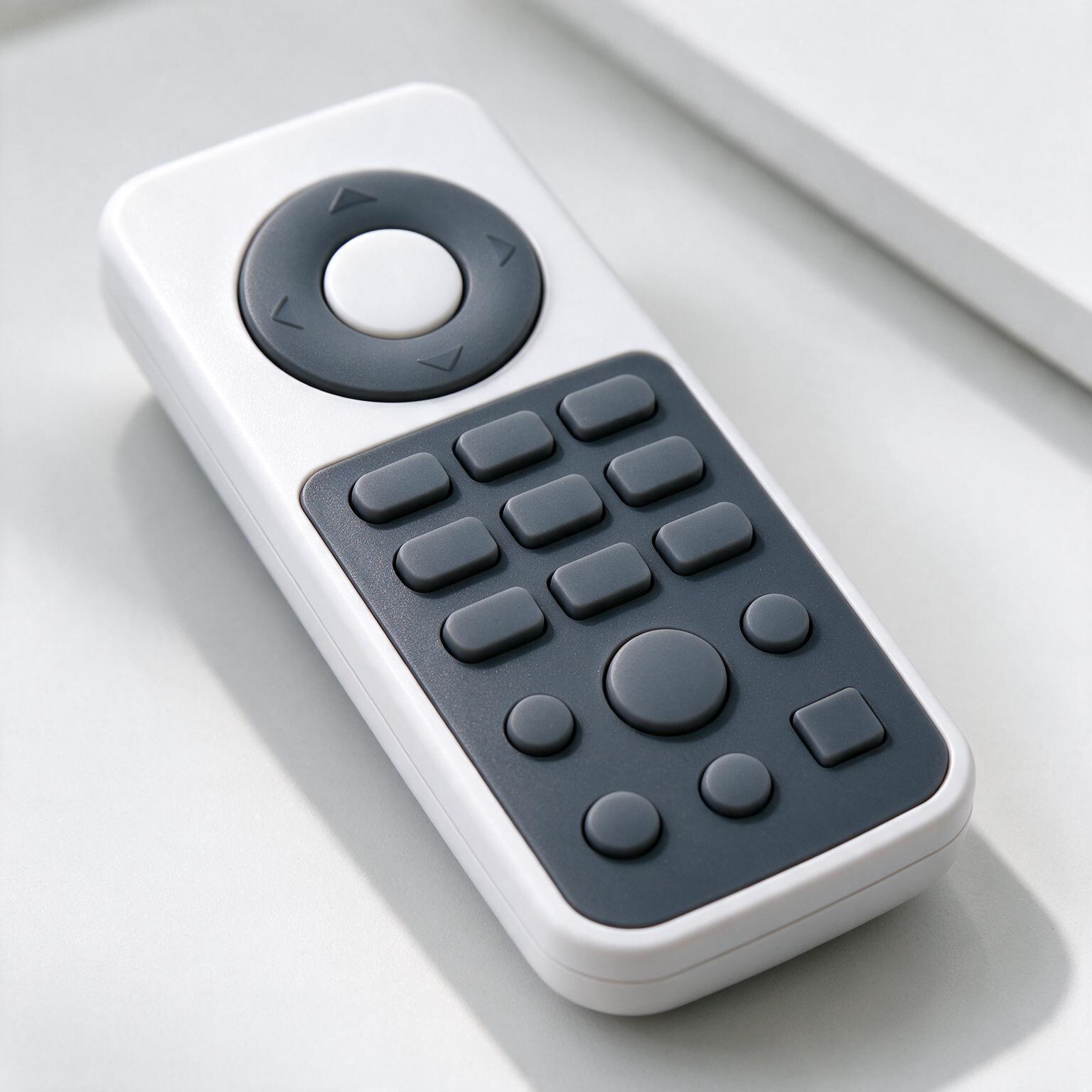
- Eleven distinct remote control SKUs in the active estate — different button layouts, keypad materials and finishes for standard rooms, suites and public areas.
- Seven of those eleven SKUs had no declaration of conformity on file referencing the current restricted-substance list. Several had a certificate, but an old one, issued before the last revision of the list.
- Roughly six weeks of usable buffer stock across the properties before replacement handsets ran out. Some sites had more. The busiest city-centre property had closer to three.
The cost comparison made the decision for them. Holding the container meant demurrage and storage charges piling up daily, plus the risk of the port authority's own queue once the documents cleared. Emergency air-freight for even a few thousand units would have cost several times the sea-freight rate per unit — and it wouldn't have closed the documentation gap. It would just have moved non-compliant stock faster. Neither option touched the real problem: no one could state, SKU by SKU, what the product contained.
Worth saying plainly — the parts were probably fine. Most remote controls are. The failure was visibility, and visibility failures are cheap to fix only if you fix them before the container arrives.
What was actually done: four actions, each with its reason and its price
1. Pull every SKU into one bill of materials
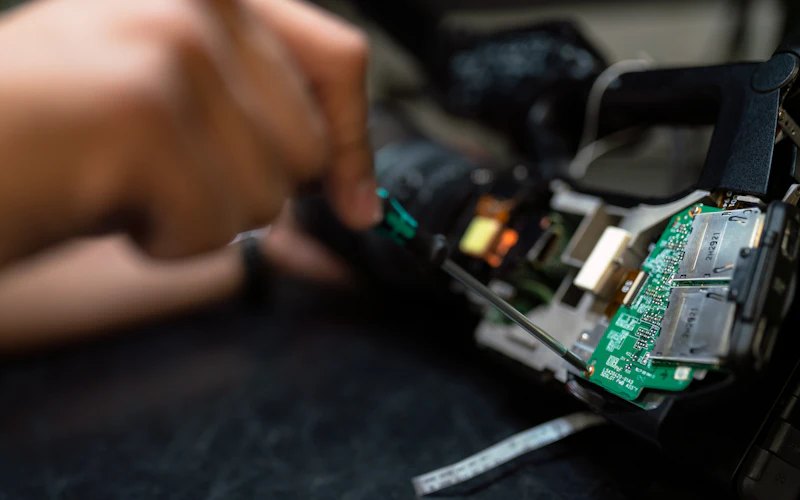
The buyer collected the eleven SKUs into a single bill of materials and mapped each component — housing, PCB, dome switches, elastomer keypad, IR emitter, battery contacts, screws — to whatever material declaration existed. Where nothing existed, the line was marked open rather than assumed compliant.
The reasoning was simple. The gap sat in the paperwork, not the product. You can't ask a supplier a precise question until you know which part you're asking about. The cost was roughly two weeks of one buyer's time, most of it chasing documents and reconciling part numbers that differed between the two suppliers for what turned out to be the same component.
2. Ask for declarations against the current list, not old certificates
Rather than accept the certificates on file, the buyer went back to both suppliers and asked for declarations referencing the current restricted-substance list by revision. That caused friction. One supplier pushed back, arguing its existing certificate was valid. It was — for the list as it stood when issued. Not the same thing.
The price here was delay and some relationship strain, and it's the step most buyers skip. A certificate with a date on it isn't a compliance answer; it's evidence about a moment. If the restricted-substance list has moved since, the certificate tells you what was true then.
3. Respecify one component rather than re-engineer the remote control
Of the open lines, one stood out: the elastomer keypad. It was the only part with no verifiable declaration and a plausible route to restricted substances — elastomers carry plasticisers, and plasticisers are exactly where restricted-substance lists tend to bite. The alternative was a full re-design across eleven SKUs, which would have meant new tooling, new firmware checks and months.
Instead the buyer respecified the keypad material to a compliant alternative on the affected SKUs only. Cost was a tooling touch-up on the keypad mould plus a requalification run — button feel, actuation force, legend durability and drop behaviour all had to be re-checked. Not free, but a fraction of a platform change. This is the trade-off most groups get wrong. They either ignore the one risky part or over-react and redesign the whole product.
4. Build a per-SKU compliance register with a named owner
The last action was the least glamorous and the most durable. QA built a simple register — one row per SKU, columns for supplier, declaration revision, date received, open items and next review. One person owns it. It gets a standing monthly review.
The point: remote control RoHS compliance stops being a scramble triggered by a shipment and becomes a record that is either current or visibly not. Setup cost was modest internal time, and the monthly review is a recurring hour, not a project.
The result over two quarters: what moved and by how much
The metric that mattered was simple — the share of remote control SKUs with a current, traceable declaration. At the start that share was a clear minority, roughly a third, and some of those were stale. Over about six months it moved to near-complete across the active estate. The keypad respecification was documented, and the held shipment cleared once the file supported it.
Two honesty notes. First, the clearance timeline depended partly on the port authority's own queue, not on anything the buyer controlled. A clean file gets you into the queue; it doesn't skip it. Second, "near-complete" is deliberate — a couple of low-volume SKUs for public areas stayed open longer because the supplier was slow to respond, and the register showed that rather than hiding it.
The buffer stock never ran out. Modest result, but it's the one the properties cared about.
What transfers, and what does not
Four things carry over to almost any remote control sourcing programme:
- Consolidate the BOM first. The compliance gap is usually a visibility gap. You cannot audit what you have not listed.
- Question stale certificates. Ask for declarations against the current list revision, and expect supplier friction. Budget for it.
- Target the single high-risk component. Elastomer keypads, soft-touch coatings and certain plastics are the usual suspects. Fix the one part; don't re-engineer the platform.
- Give one person ownership of a per-SKU register. Compliance that lives in a shared drive and nobody's job description will rot within a year.
What doesn't transfer matters just as much. The specific part that failed here — the keypad — isn't universal; a different design might put the risk in a coating or a battery contact. Supplier responsiveness varies sharply by region, and a group sourcing from suppliers who answer document requests in days will move far faster than one waiting weeks. The clearance timeline is partly outside anyone's control. And a smaller operator with no QA function can't hand the register to QA — it needs a different owner, maybe the central buyer or the facilities lead, and a simpler cadence.
If you're specifying remote controls for a hotel group or a control-platform deployment, treat remote control RoHS compliance as a register you maintain, not a certificate you collect. Start with the BOM, ask the awkward question about the certificate date, and fix the one risky part before the container sails. Questions on how this maps to your own SKU list can go to peter.sun@serow-tech.com; we reply within one working day.
More from the newsroom
Keep reading.
Three other notes from the same team.
Start a project
Send the control target, not a catalogue request.
Tell us what the remote has to control, which radio the installed base uses, and where it ships. We will reply with the questions that decide the architecture.