
remote control NPI process: in-house team versus contract manufacturer
Published 2026-11-26 · 5 min read
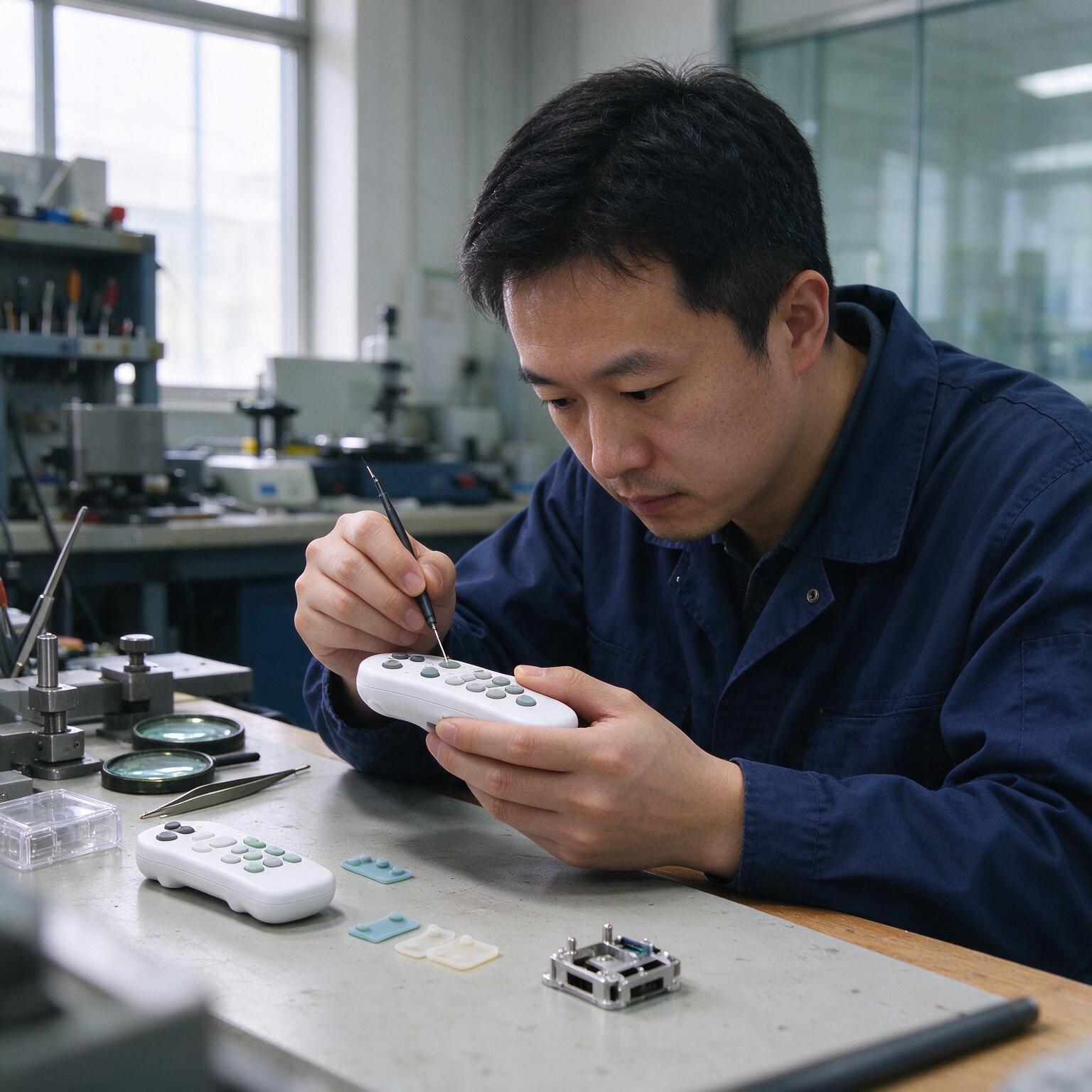
The verdict first
If your product has a radio, a battery or a safety claim attached to it, keep the remote control NPI process in-house — even when it costs you a year. If you are shipping a derivative SKU on a platform you already understand (a new button legend, a new colourway, a second housing mould), hand it to a contractor and spend your own engineers on something else.
That split is the whole argument. The rest of this piece explains why the line falls there and not somewhere more convenient.
What each option actually is

In-house ownership
You own the schematic, the firmware, the RF matching, the tooling drawings and the test plan. What that buys you is control. When a hotel group asks why the remote drops key presses two metres from the TV, someone on your payroll can put a spectrum analyser on it and answer, instead of forwarding an email chain. It is slower and it ties up people. The knowledge stays, though.
Contracting the build
You hand a defined specification to an ODM and buy finished units. What that buys you is throughput: injection moulds, SMT lines, RF test benches and a compliance file, without hiring for any of it. You are buying someone else's existing platform and their process discipline. What you are not buying is the reasoning behind the design.
The parameters that decide it
In practice, five things separate the two routes. None of them is price per unit.
| Parameter | In-house | Contractor |
|---|---|---|
| Design authority | Yours. You can change the antenna, the MCU or the key layout without asking. | Theirs. You can specify the housing and the keymap; the platform underneath stays closed. |
| Tooling and test ownership | You pay for the moulds and the RF chamber, and you keep them. | Usually the contractor's, unless you negotiate and pay to own the tool outright. |
| Communication latency | Hours. The firmware engineer sits two desks from the mechanical designer. | A day or more per iteration once time zones and language are in the loop. |
| IP exposure | Contained, assuming your own access controls hold. | Your keymap, your industrial design and your RF tuning data sit on someone else's server. |
| Change-order speed | As fast as your own backlog allows — often days. | One to three weeks per engineering change, longer if tooling is affected. |
Read that latency row again. Most of the pain in contracted development isn't the engineering; it's the round trips. A problem one building can diagnose in an afternoon can eat a week when every question needs a written reply.
Cost and lead time: where the range comes from
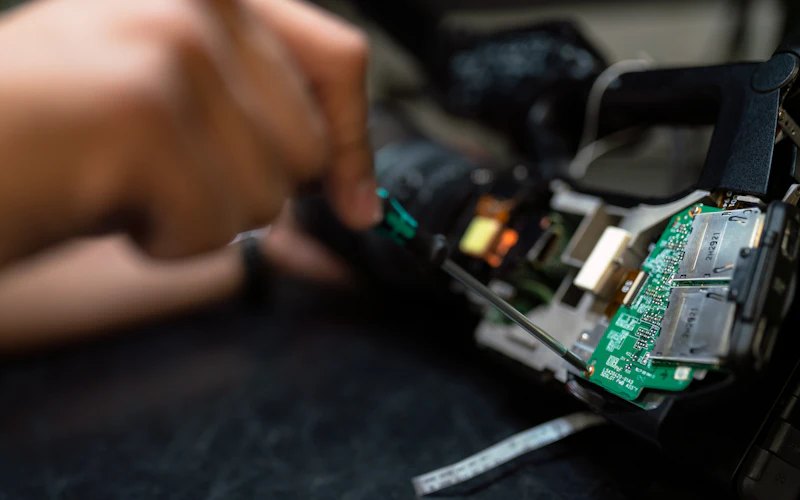
Treat any single number you are quoted for either route as a warning sign. The spread is genuinely wide, and it is wide for structural reasons, not because nobody haggled hard enough.
On the in-house side, people and equipment dominate. You need RF engineering, embedded firmware, mechanical design and a test function. Whether that's four people or one person wearing four hats shifts the budget by an order of magnitude. You also need a way to verify 2.4 GHz performance — an anechoic chamber, or a paid visit to a lab that has one. Budget for repeat visits, not one.
On the contractor side, the quoted unit price hides the real cost: non-recurring engineering, tooling, and the change orders that arrive after you have signed off the specification. A derivative SKU on an existing platform can move from brief to production in a few months. A ground-up design handed to an ODM routinely runs past a year once certification retests are counted. Both figures move with the number of moulds, the number of radio variants and how much of the compliance work you are willing to own.
The ranges overlap so much because the two routes aren't really priced the same way. In-house front-loads cost into salaries and equipment you keep. Contracting front-loads it into tooling and NRE you may never own. A cheap quote usually means the platform already exists and you're adapting it — fine, if the adaptation is genuinely small.
Then there's a third cost that rarely appears in either quote: the cost of finding out late. Suppose the battery placement detunes the antenna and nobody runs a radiated test until the tooling is cut. Now you're paying for a second mould. That failure mode costs more than either development route, and it happens on both.
Which one to pick
- Long-range or 2.4 GHz radio with a tight link budget? In-house. Antenna tuning is iterative and physical.
- Safety device — a nurse-call handset, an emergency stop? In-house, and own the failure analysis yourself.
- Changing the legend, the housing colour or the key count on a platform already in production? Contractor.
- A hotel group ordering a branded variant for one property? A contractor with an existing hospitality platform.
- Your control platform is the differentiator and the remote is a peripheral? Contractor, and keep your firmware team on the platform.
- No RF engineer and no realistic plan to hire one? Contractor. An in-house programme without RF competence is worse than either option.
That last line is the uncomfortable one. Plenty of companies choose in-house out of pride and then discover they can't debug a matching network. Owning the process on paper and owning it in the lab are different things.
What to agree in writing before you start
Whichever route you take, the contract matters more than the technical spec. Four items cause most of the disputes I've seen.
Tooling ownership. State who owns the moulds and the test fixtures, and at what point ownership transfers. If the contractor owns the tool, ask what happens to it if you leave — and get the answer in writing, including the cost of shipping it out.
Change-order mechanics. Define what counts as a change, how it is priced and how long it takes. A specification that says "minor changes included" without defining "minor" is an argument waiting to happen.
Test data handover. Ask for the actual RF test records at the frequencies you care about, not a pass certificate. If a contractor can't produce per-unit test data, you can't audit a field failure.
IP and exclusivity. For an ODM build, state clearly that your industrial design and keymap are not to appear on another customer's product. Vague reassurances here are common and worthless.
One more: agree a review cadence. Even on a fully contracted programme, you want a scheduled technical review with the people doing the work, not a monthly status email. Outsourcing the build doesn't make the remote control NPI process stop being your problem — it just stops you being able to fix it quickly.
If you're weighing this up for a hospitality or control-platform product and want a straight answer on which side of the line your case falls, write to peter.sun@serow-tech.com with the radio type, the quantity and the target certification. We reply within one working day.
More from the newsroom
Keep reading.
Three other notes from the same team.
Start a project
Send the control target, not a catalogue request.
Tell us what the remote has to control, which radio the installed base uses, and where it ships. We will reply with the questions that decide the architecture.