
Remote control FCC certification revisited: the retest that cleared a 2 dB margin
Published 2026-11-24 · 5 min read
Context: a 400-room refurbishment gated by two radio product lines
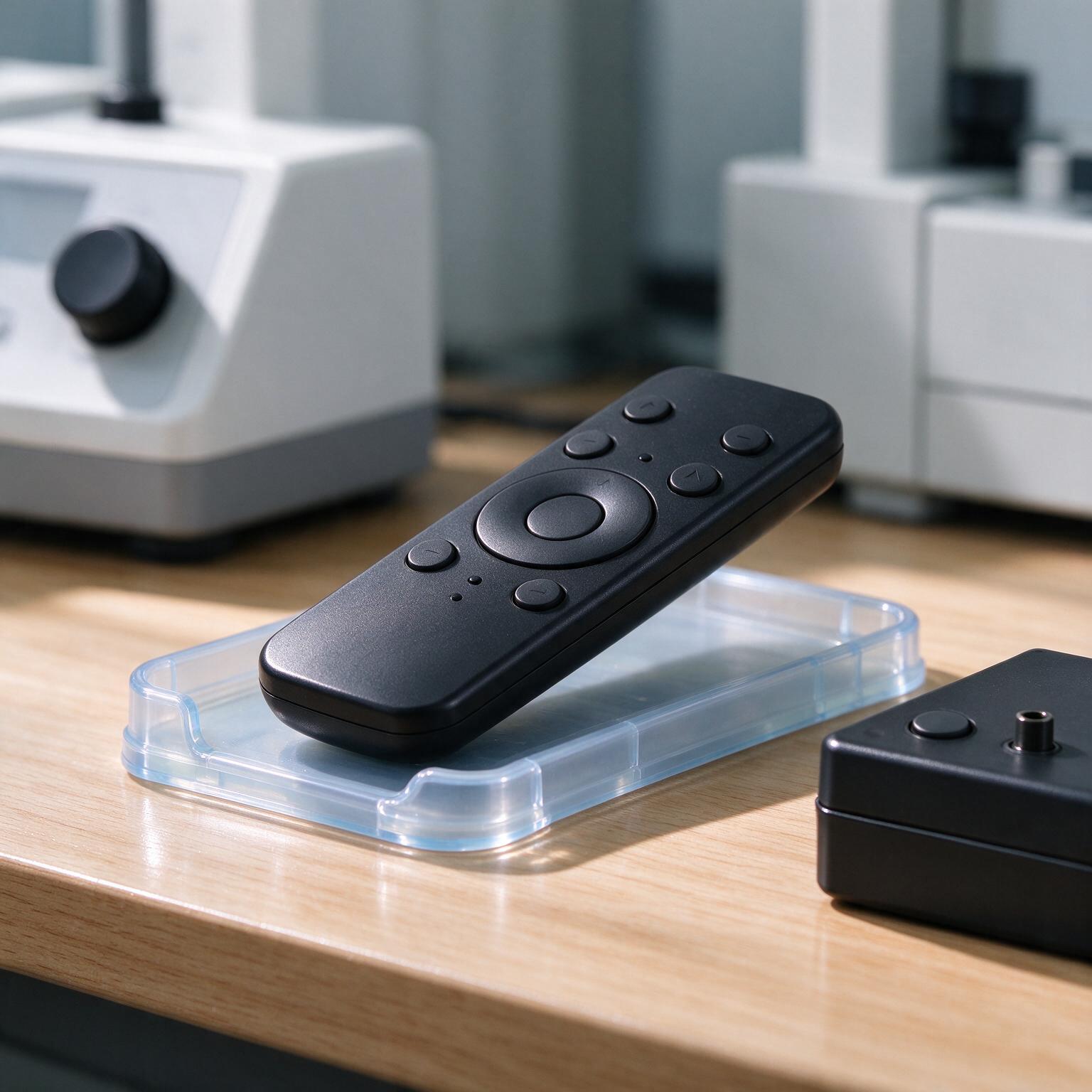
A hotel group refurbishing a 400-room property had two radio products on the same critical path: the in-room handset, and the wall-mounted control panel that talks to the building management system. Both had to be certified before any room could be released to guests. Both sat inside a 14-month programme, and the first floor of rooms was due to open for bookings at month eleven. The group didn't make either product. It bought them through an ODM and put its own brand on the front. That's how most of hospitality works, and it's also where certification risk tends to pile up, because the brand owner carries the liability for the filing while the ODM carries the design.
Two product lines meant two certification files, two sets of worst-case configurations, and two chances for a retest to slip. The refurbishment budget ran to eight figures in the local currency, so the certification cost was a rounding error against it. The cost of a late opening was not. Every week of delay on room release pushed revenue out of the quarter without pushing any cost out with it.
How bad it was, in numbers rather than adjectives

The handset design cleared the FCC Part 15 radiated-emissions limit by roughly 2 dB at the worst-case channel. Nobody should feel comfortable with that. A 2 dB margin sits inside the normal spread between one test lab and another, between one sample and the next off the line, and between a prototype and a production unit with a slightly different battery contact.
Three pre-scans failed in five weeks. Each failure landed on a different channel or a different orientation — the pattern that tells you the problem isn't one bad component but a design that's marginal across its whole operating envelope. The launch date couldn't move. The booking system had already released the room inventory, and the group had committed to a soft opening with press and trade partners invited.
What bothered me more than the failures was the disagreement about what had failed. The ODM's engineer read the plots one way, the lab's report read them another, and nobody could say with confidence which configuration had produced the worst reading. Without that, a retest is a coin toss with a fee attached.
| Indicator | Before | Target |
|---|---|---|
| Worst-case radiated margin | About 2 dB | Comfortable pass with headroom |
| Pre-scan attempts | 3 failures in 5 weeks | First-attempt retest pass |
| Worst-case configuration defined | No | Documented and repeatable |
| Time to room release | Fixed by booking calendar | No movement permitted |
What was actually done: four actions, each with a reason and a cost
None of the four actions was exotic. The value came from the order we did them in, and from refusing to skip the boring one.
1. Re-measure the setup before touching the design
First move: re-run the existing design in a controlled setup and record everything — cable routing, sample orientation, battery state, firmware version, the exact channel list. The reasoning is simple. If you change the antenna while the measurement setup is still unstable, you can't tell whether the improvement came from the antenna or from the setup. Cost: about a week and a lab booking. What it bought was a baseline we could compare later runs against without argument.
2. Change the antenna and the enclosure together
The emissions were coming from the handset's internal antenna coupling into the plastic enclosure and the ground plane around the keypad. Change the antenna alone and you shift the problem to another frequency. Change the enclosure alone and you detune the antenna that's already there. So both moved in the same iteration. That cost tooling time on the enclosure — a revised mould insert, not a new tool — and it meant a longer design freeze than the ODM wanted. Deliberate trade-off: one longer iteration instead of two short ones that each fail.
3. Rework the test plan around worst-case channels
The original test plan listed the channels the ODM habitually tested. That is not the same as the channels that radiate worst. We rebuilt the plan to identify the worst-case channel from the design's own harmonic structure, then test that channel in the orientation and battery condition most likely to raise emissions. The cost was analysis time before any hardware went back to the lab — roughly two weeks that felt like delay and in fact saved a retest cycle.
4. Rebuild the remote control FCC certification file
This is the step most teams skip, and it's the one that decides whether a retest is a clean event or a rerun of the same argument. We rebuilt the remote control FCC certification file so that every test report mapped to a named configuration: which sample, which firmware, which antenna variant, which worst-case justification. The cost was administrative — a few days of an engineer's time spent writing configuration tables instead of debugging. The benefit: a retest can't produce an ambiguous result, because there's only one configuration it can be testing.
The result, over roughly ten weeks
From the first re-measurement to the retest report was about ten weeks. The headline metric is the worst-case radiated margin: roughly 2 dB before, a pass with clear headroom at the worst-case channel after. The precise figure belongs in the filing, not in an article, and it will differ for any other design.
The second metric matters more for the programme. The first retest cleared on the first attempt. That's the outcome the file rebuild was designed to produce. A first-attempt clear isn't luck; it comes from having defined, in advance, exactly which configuration the lab would measure and why it was the worst case.
The room release date didn't move. The second product line — the wall panel — was certified on its own schedule without drawing on the same lab slots, because we kept the two files separate rather than bundling them into one submission.
What transfers to other cases, and what does not
The transferable part is measurement discipline, and it's worth stating precisely.
- Establish a stable baseline before changing hardware. A design change made against an unstable setup produces a number you can't defend in a filing or in a conversation with a lab.
- Define the worst case explicitly and in writing. Channel, orientation, battery state, firmware, antenna variant. If it isn't written down, the retest will test something else.
- Change coupled elements together. Antenna and enclosure interact; iterating them separately usually costs more than iterating them once, properly.
- Treat the certification file as an engineering deliverable. Configuration tables aren't paperwork. They're the thing that makes a retest repeatable. This applies to any remote control FCC certification programme, not only to hotel handsets.
What doesn't transfer is everything specific. The 2 dB starting margin is a property of that design, not a benchmark. The ten-week timeline depended on lab availability in a particular season and on an ODM that could turn a mould insert quickly. A different supplier, a different lab queue or a design with a narrower band would give you a different schedule, and anyone quoting ten weeks as a general figure is guessing.
The lab choice doesn't transfer either. A lab that's convenient and a lab that's rigorous aren't always the same building, and for a marginal design the second matters more than the first. The group's decision to keep the two product files separate rather than bundling them doesn't generalise either — bundling can save cost when both designs are comfortably compliant, and it concentrates risk when either one is marginal.
One more thing worth saying plainly. This wasn't a turnaround story. The design was marginal, the process around it was loose, and tightening the process fixed most of it. The hardware changes were real but modest. Most certification failures that look like hardware problems are process problems wearing a hardware costume.
If you're a brand owner or a control-platform team buying radio products through an ODM, the question to ask before design freeze isn't "will it pass" but "which configuration will the lab measure, and can you show me why that's the worst case". If the ODM can't answer that in writing, the margin number on the datasheet doesn't mean much yet. Serow Controls works on this specific problem — the certification file and the measurement discipline around it — and can be reached at peter.sun@serow-tech.com. Replies come within one working day.
More from the newsroom
Keep reading.
Three other notes from the same team.
Start a project
Send the control target, not a catalogue request.
Tell us what the remote has to control, which radio the installed base uses, and where it ships. We will reply with the questions that decide the architecture.