
Remote control BQB certification: what the test covers and what it leaves to you
Published 2026-11-28 · 5 min read
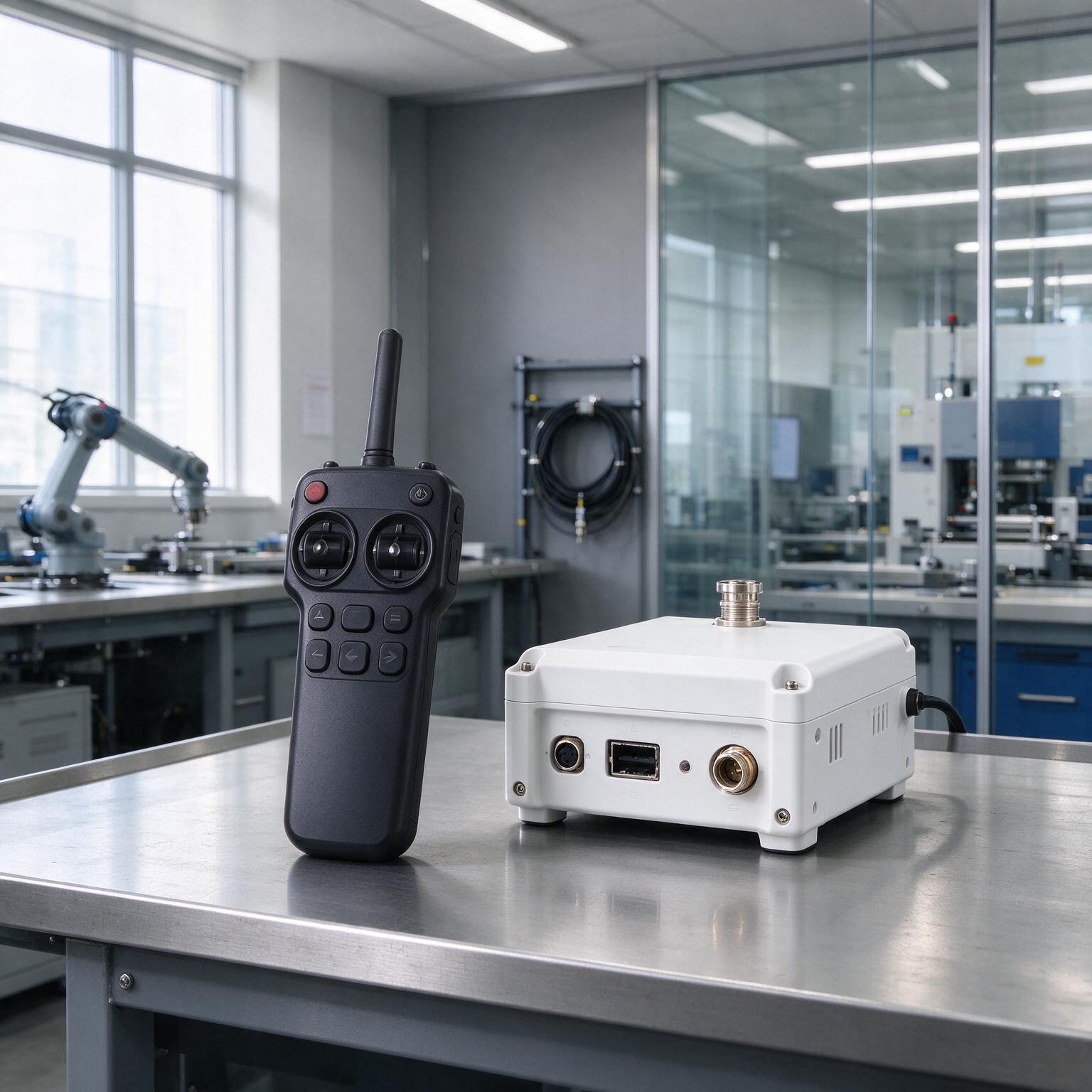
Bluetooth SIG qualification for a remote control is a paper trail, not a product test. The programme gives you a listing in the SIG's qualified design database, and that listing rests on test evidence generated somewhere else. A remote can hold a valid listing and still fail on a hotel wall, in a rack of set-top boxes, or at a customs desk. Knowing which of those failures the programme addresses — and which it leaves to you — is most of the skill in buying one.
Remote control BQB certification in one sentence
Remote control BQB certification is the Bluetooth SIG's qualification route for any product with a Bluetooth radio inside it: the manufacturer joins the SIG, completes a Declaration, and backs it with test evidence against the applicable Bluetooth test specifications, so the design appears in the qualified design database under a recognised listing.
That is the whole scope. It is a conformance and trademark right, run by a private standards body. It is not a safety mark, not a radio type approval, and not a promise that the remote will work with a particular television or access-control panel.
How the qualification programme works, layer by layer

Three layers, each with its own inputs and outputs. Buyers usually see only the third, which is why the first two cause most of the arguments.
Layer one: membership and the Declaration
Input: a legal entity and a product design. Output: a qualified design listing with a Declaration ID.
The company has to be a SIG member before it can declare anything. Membership tiers carry different fee structures, and the fee is annual and per company rather than per product — which is why small ODM houses often prefer to work under a customer's membership instead of holding their own. That arrangement is legitimate, but it has consequences. The listing sits with the member. If the relationship ends, the customer keeps the listing, and the ODM cannot reuse it for anyone else.
The Declaration itself is a set of statements about the design: which specification versions it implements, which design it derives from, which test evidence backs it. It gets signed, not negotiated. Getting a field wrong here is the most common way a listing turns out to be unusable at the point of sale — the declared product name doesn't match the retail packaging, or the declared hardware version doesn't match the one shipping.
Layer two: profile and protocol test cases
Input: the remote's implementation of the relevant profile. For a BLE remote that is normally HID over GATT; an older BR/EDR remote uses HID over L2CAP. Output: pass/fail records against the test specification for that profile, plus the underlying link layer and host layers.
These test cases are not a functional test of your remote. They check that the implementation behaves the way the specification says on the specific interfaces the test suite exercises. A remote can pass every case and still ship a key-mapping scheme that confuses a host, because key mapping is application-level behaviour, not a protocol conformance matter.
Two practical points come up again and again. The test specification version you test against must match the one you declare — mixing versions is a rejection. And if the design uses a pre-qualified component, whether a module or a qualified design from a silicon vendor, some test cases can be inherited rather than re-run, but only where the component was qualified with the same configuration and the same profile support.
Layer three: the test facility and the report
Input: hardware, firmware and a chosen test lab. Output: a test report the listing depends on.
Testing has to be carried out by a SIG-recognised test facility, or in some cases by the member's own lab under the programme's rules. The report is what an auditor would ask for if the listing is ever challenged. Buyers should ask for it in any case: a Declaration ID alone tells you a listing exists, not what was tested or which firmware was on the board.
In most remote designs, firmware matters here more than hardware. The report references a specific firmware build. A build number on a shipping unit that doesn't appear in the report is a defensible reason to reject a delivery.
Where remote control BQB certification stops: the boundary and quiet failures
This is the section most suppliers won't volunteer. The programme is narrow by design, and each gap below has, at some point, held a shipment, pulled a retail listing, or sent a product back.
Radio, EMC, safety and market access sit outside the scope
Bluetooth qualification says nothing about spurious emissions outside the band, nothing about EMC immunity, nothing about battery safety, and nothing about whether the product may legally be sold in a given country. Those are separate regimes — the radio equipment directive in the EU, FCC rules in the US — each with its own test house, its own reports, its own mark.
A remote with a pristine BQB listing and no CE or FCC evidence is not sellable in those markets. The reverse is true as well. Budget for both, and don't let a supplier present one as covering the other.
Pre-qualified modules and the inherited-listing assumption
A pre-qualified module cuts the work down, but it doesn't remove it. Inheritance applies to the radio and link-layer portion. The profile implementation on top — the HID service, the report map, the descriptor structure — is still your product's responsibility and still needs test evidence.
The quiet failure is a module qualified in one configuration and used in another. Different antenna, different matching network, different enclosure, different power supply: any one of these can push the design outside the configuration the module's listing covers. The supplier's datasheet may mention it in a footnote. Ask directly whether the antenna configuration in your build matches the one in the module's qualification, and get the answer in writing.
Firmware changes after listing and what voids what
A listing is tied to a design. Changes that affect the Bluetooth implementation — stack version, profile implementation, report descriptor, RF path — can require a new Declaration or a re-test. Changes that don't touch the Bluetooth portion, such as a cosmetic housing change or a new key legend, generally don't.
The line isn't always obvious, and ODMs under schedule pressure sometimes move it. The realistic control is configuration management: a firmware version register that the supplier maintains and that you can audit against the listing. If a supplier can't tell you which build was tested, treat the listing as unverified.
Interoperability in the real world versus conformance on the bench
Conformance is necessary and insufficient. A remote that passes the test cases has shown it follows the specification on the tested interfaces. It has not shown that it wakes a specific smart TV from standby, survives a hotel's dense 2.4 GHz environment, or pairs cleanly when thirty remotes sit in the same room.
Those are interoperability questions, and the programme doesn't answer them. The only reliable answer is testing against the actual hosts you care about, in the actual environment, with a sample large enough to catch the tail. A hotel group deploying 400 remotes across a property should put pairing behaviour under contention through a pilot floor, not a bench run.
How it differs from adjacent concepts

Buyers conflate these constantly, and the confusion usually surfaces at the worst moment — when a retail compliance team asks for evidence and gets a database link instead.
BQB qualification versus regulatory type approval
| Bluetooth qualification (BQB) | Regulatory type approval | |
|---|---|---|
| Scope | Conformance to Bluetooth specifications and trademark use | Radio spectrum, EMC, electrical safety, and market-specific requirements |
| Authority | Bluetooth SIG, a private standards body | National or regional regulators and notified bodies |
| Evidence | Declaration plus test report from a recognised facility | Test reports from accredited labs, plus a declaration of conformity or certificate |
| Typical failure mode | Listing exists but does not match the shipping build or configuration | Product held at import, or withdrawn from sale, for missing or mismatched approval |
BQB qualification versus a vendor's own interoperability programme
A silicon vendor or platform owner may run its own compatibility programme — a logo, a listing on a partner page, a test matrix against its own products. These are commercial arrangements, not standards conformance. For a specific ecosystem they can be more useful than BQB, and less useful everywhere else. Neither substitutes for the other.
BQB qualification versus Qi, Zigbee or proprietary 2.4 GHz routes
Qi is a wireless power standard with its own certification body. Zigbee has its own alliance and certification programme. A proprietary 2.4 GHz protocol may have no external qualification at all, only the regulatory approvals. If a product uses Bluetooth, BQB applies. If it uses Bluetooth alongside Zigbee, both programmes apply, separately, with separate fees and separate test houses. A supplier quoting a single figure for "wireless certification" is either simplifying heavily or doesn't know.
What this means when specifying or buying a remote control
Treat the qualification as one line item in a wider compliance plan, and buy it the way you buy anything else: with a specification and a right to inspect.
Questions to put to the supplier before the purchase order
- Who holds the SIG membership this product will be declared under — you or us? If you, what happens to the listing if we change supplier?
- Which specification versions and which profile will be declared, and does the test report reference the same versions?
- Does the design inherit from a pre-qualified module? If so, confirm the antenna configuration and enclosure match the module's qualification.
- Which firmware build appears in the test report, and how do you control that build in production?
- Which regulatory approvals are being handled separately, by whom, and for which markets?
Ask for the Declaration ID and the test report, not just a logo. A supplier who has both will send them within a day — a documented request should be answered in one working day — and a supplier who can't is telling you something.
Reading a listing and a test report for what they actually cover
Check four things. The product name and model in the listing against the one on the purchase order. The hardware and firmware versions against the sample you approved. The profile and specification versions against what you asked for. And the test facility against the SIG's recognised list.
Mismatches are common and usually clerical. Clerical mismatches are still mismatches. A listing under a different model number is not evidence for the product you are buying, however honest the explanation.
Budgeting time and cost for the parts the programme does not test
Qualification itself is a modest share of total compliance effort. The larger and less predictable costs sit in regulatory testing, in re-testing after a design change, and in interoperability work against real hosts. Schedule for at least one re-test cycle: RF and profile issues found on the bench cost far less to fix before tooling than after.
For buyers in hotel groups and control-platform teams, the highest-value spend is usually the pilot — a floor, a rack, a real deployment, with the remotes you intend to ship. Conformance gets you through the door. The pilot tells you whether the product works, and no listing in a database will do that for you. Questions on a specific programme can go to peter.sun@serow-tech.com; Serow Controls has been building remotes in Shenzhen since 2014.
More from the newsroom
Keep reading.
Three other notes from the same team.
Start a project
Send the control target, not a catalogue request.
Tell us what the remote has to control, which radio the installed base uses, and where it ships. We will reply with the questions that decide the architecture.