
IR learning remote control rebuild: what broke, what we changed, what it cost
Published 2026-11-28 · 5 min read
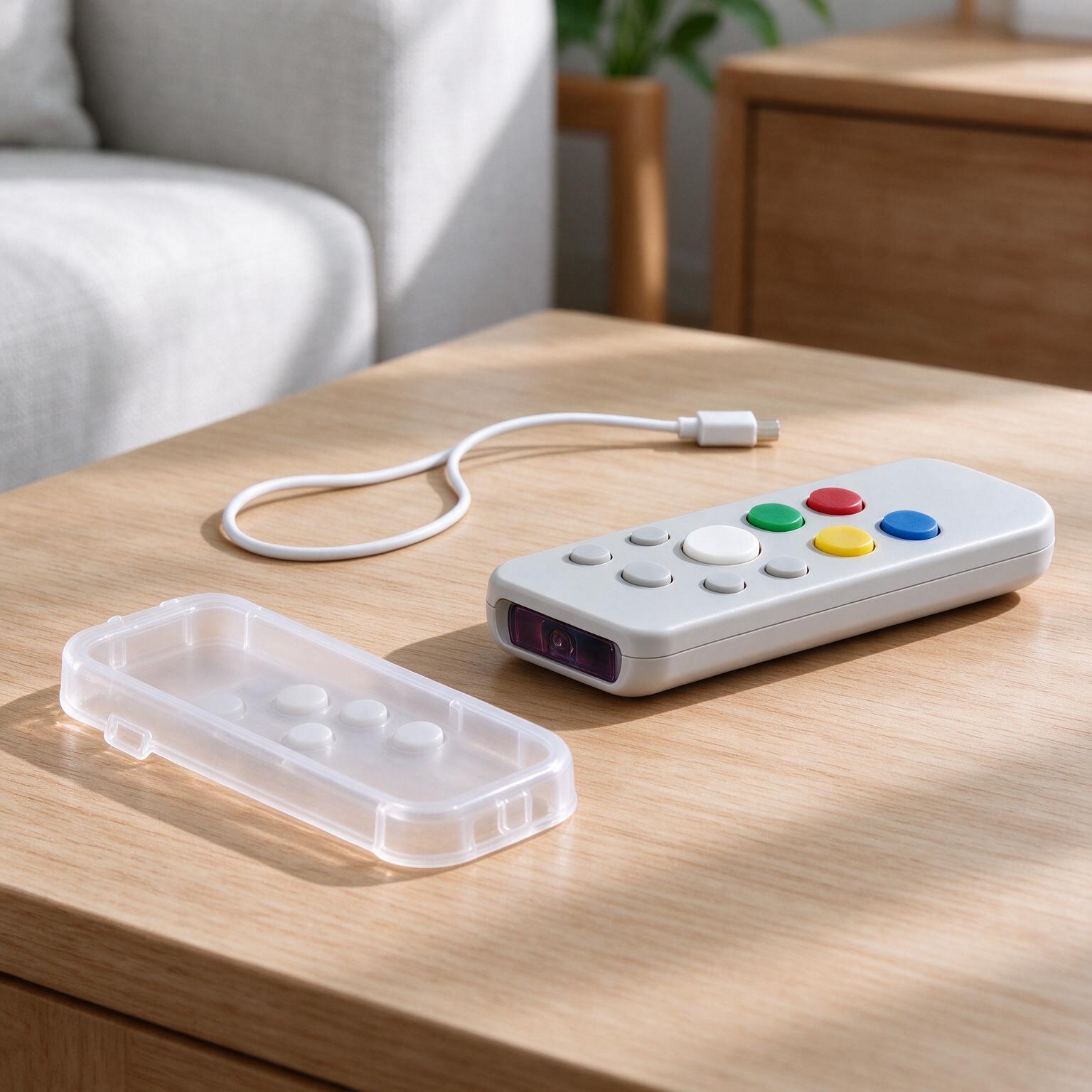
Context: a mid-refurbishment hotel with two protocols and one maintenance van
A 400-room hotel, partway through a floor-by-floor refurbishment, is a bad place to standardise anything. Half the building is new ceiling cassettes on one control protocol; the other half is the original in-room fan coils on another. Roughly 6,000 guest-facing controllable devices sit across the two estates, and the refurbishment was scheduled to run for about 18 months, which meant the device mix would keep shifting underneath any decision made early on.
Hotel groups and control-platform teams run into this shape often: not a greenfield install, not a full rip-out, but a long middle period where new and old equipment coexist. Whatever handset standard you pick has to work on both sides of the line, because guests do not know which floor was refurbished.
The failure, counted rather than described

The housekeeping and maintenance teams were circulating more than 30 different remote models. Some were original equipment handsets, some were generic replacements bought in small batches, and a few were unidentifiable units with no visible part number. Replacement lead time per model ran to several weeks. For the older fan coil handsets it was worse, because the original supplier had moved on to a different product line.
Roughly a dozen air-conditioning call-outs a week showed up in the maintenance log. When we triaged those, most traced back to a missing or mislaid handset rather than a faulty unit. The unit was fine. The guest could not turn it on, or could not change the setpoint, or had a handset from the room next door that did not match the equipment.
| Measure | Baseline |
|---|---|
| Distinct handset models in circulation | More than 30 |
| Replacement lead time per model | Several weeks |
| AC call-outs logged per week | About 12 |
| Share of call-outs caused by missing handset | Most |
Two costs hid inside those numbers. The first was technician time: a call-out that ends with a handset being found or swapped still consumes a visit, a log entry and a guest apology. The second was capital: buying small batches of obsolete handsets is expensive per unit, and the stock has no resale or reuse value once a model is retired.
What was actually changed
The decision was to make an IR learning remote control the standard in-room handset across both estates. A learning handset can be taught the code set of whatever unit sits in the room, so one part number covers both protocols instead of two parallel spares chains. That single choice unlocked the three supporting actions below.
1. Audit and tag before buying anything
Every controllable unit was walked and logged: room number, equipment type, protocol, existing handset model, condition. Each handset then got a durable tag carrying the room number and a unit-type code. We did this first for a simple reason — without the audit you do not know how many distinct code sets you are dealing with, and you cannot size the spares holding. Cost was technician hours, roughly two people for a working week across 400 rooms, plus the tags. Guest disruption was close to zero because the audit happened during routine room servicing.
2. A reflash-and-relearn procedure with stored code libraries
Each new handset was loaded from a stored code library keyed to the unit type recorded in the audit, then verified in the room against power, mode and setpoint. A stored library rather than teaching each handset by hand buys repeatability: a technician replacing a handset at 11pm should not be pointing two devices at each other and hoping. The library also gives you a documented mapping, so a handset swap becomes a lookup rather than a puzzle. Cost was the setup effort to build and verify the library, plus per-unit time of a few minutes at install. The ongoing saving is that a replacement handset can be pre-loaded in the workshop and fitted on arrival.
3. A locked mounting point at each unit
Each handset got a fixed, wall-mounted holder next to the unit control, with the handset tethered or clipped. The reason here is behavioural, not technical: handsets walk because they are loose objects in a room with a departing guest and a trolley full of bedding. A mounting point makes the handset part of the room rather than part of the guest's luggage. Cost was the holder hardware per room and a small amount of install time. Guest disruption was minor, though it did generate a short run of questions at the front desk in the first weeks.
Unit price for the learning handsets sat above the cheapest generic replacements but below original equipment spares for the older fan coils. The trade-off is real: you pay more per handset to stop paying for a fragmented spares chain.
The result over two heating and cooling seasons

We ran the comparison over two full heating and cooling seasons, measured against a baseline period of the same length immediately before the change. Call-out volume for air-conditioning issues fell from about a dozen a week to a low single-digit figure. Handset replacement spend dropped by more than half, chiefly because the number of distinct part numbers collapsed and the surviving spares were cheaper to hold. Average time to close a handset-related job went from a multi-week wait, where a specific model had to be sourced, to same-day in most cases, because the workshop held pre-loaded stock.
None of this was instant. The audit and library build took weeks before the first handset went in, and the call-out rate only moved materially once the mounting points were fitted across most rooms. The learning handset alone would not have done it; the holder and the tagging did as much work as the electronics.
What transfers, and what does not
The sequencing transfers. Audit first, then standardise, then fix the human behaviour around the device. Teams that buy handsets before counting what they have to control tend to end up with a new fragmented estate. The case for a learning handset over a fixed-code one also transfers wherever a site has mixed equipment or an unclear equipment history: one part number beats a shelf of them, and the code library is a document you can hand to a new maintenance lead.
The arithmetic is what does not transfer. This site had two protocols and a refurbishment running in parallel, which inflated the model count and made the spares problem acute. A single-protocol site with a stable equipment list will see a smaller gain, and a fixed-code handset may be the cheaper correct answer there. Staffing ratio matters too: a property with more technicians per room can absorb a looser process, because a call-out costs less of a scarce resource. A lean team gets more from the mounting points and the pre-loaded spares than from any handset feature.
Expect these failure modes elsewhere: staff reverting to the old handsets if the new ones are not visibly better in the room; code libraries drifting out of date after equipment swaps; and mounting points being removed during deep cleans. Each of these erodes the result quietly, over months, without anyone logging it.
The cost model breaks if the learning handsets are bought at a premium large enough that the per-unit saving on spares never repays it within the planning horizon. It also breaks if the site cannot commit technician hours up front for the audit and library. If either condition holds, fix the mounting and tagging first — that is the cheaper half of the intervention, and it addresses the dominant failure, which is a handset that is simply not where it should be.
If you are weighing this against a fixed-code approach, the question to ask is not which handset is better in the abstract. It is how many distinct code sets you will be supporting in 18 months, and whether you can name them today. If you cannot, start with the audit. Enquiries about ODM programmes go to peter.sun@serow-tech.com and are answered within one working day.
More from the newsroom
Keep reading.
Three other notes from the same team.
Start a project
Send the control target, not a catalogue request.
Tell us what the remote has to control, which radio the installed base uses, and where it ships. We will reply with the questions that decide the architecture.