
IP rated remote control: what IP65, IP66 and IP67 commit you to
Published 2026-11-19 · 5 min read
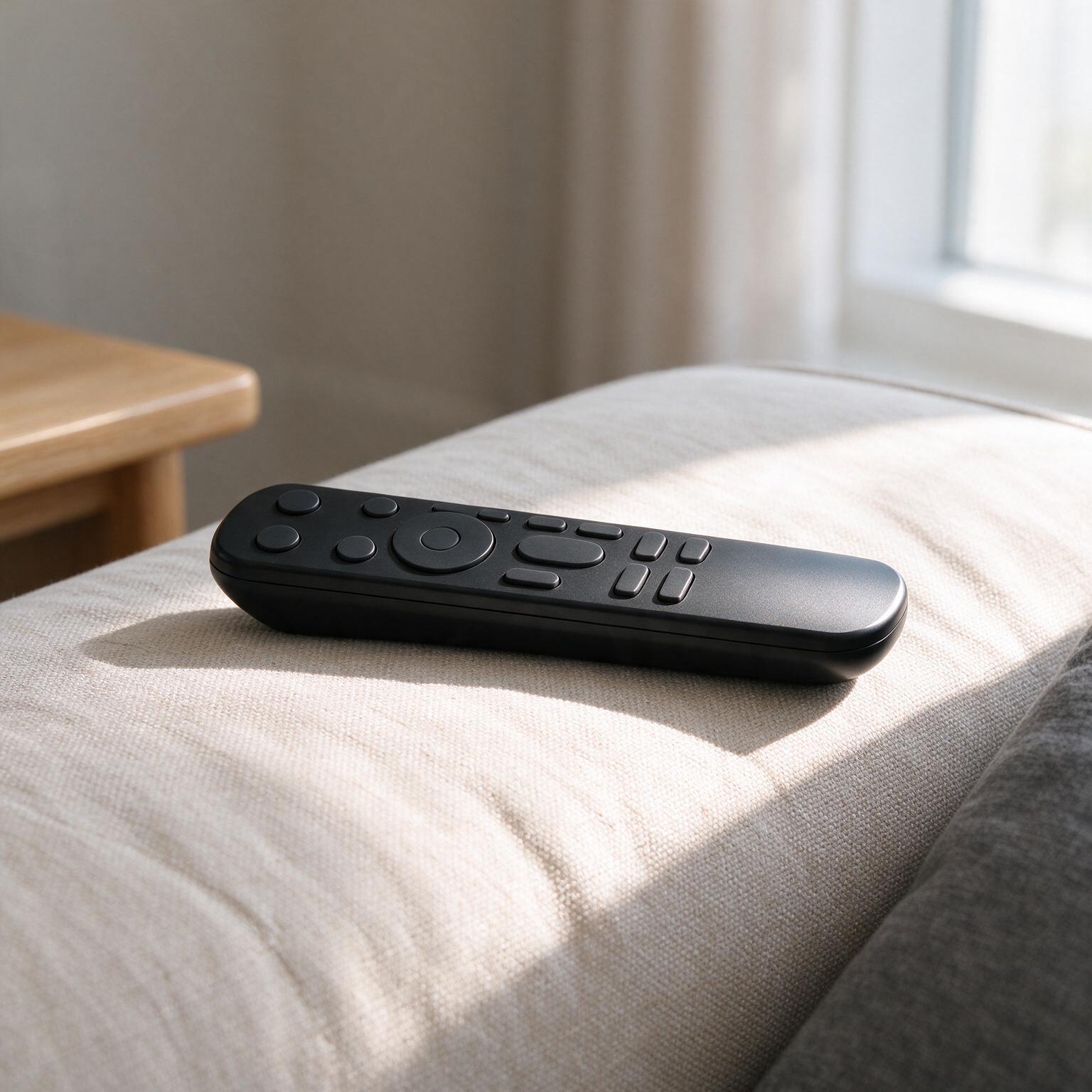
Most emails we get about an IP rated remote control come from buyers who just need a handset that survives washdown, weather, or a dropped hose. What follows sticks to what the digits actually promise — and where they stop promising anything at all.
What does IP65 on a remote control actually protect against?
IP65 means dust-tight and protected against low-pressure water jets from any direction. No more, no less. The first digit, 6, is the dust rating: no dust ingress at all under test conditions. For a handset that lives in a kitchen or a plant room, that first digit matters more than most buyers expect. The second digit, 5, is the water rating, tested with a 6.3 mm nozzle delivering 12.5 litres per minute at roughly 30 kPa from about 3 metres, for at least three minutes per square metre of surface.
That last clause is the one to read twice. The jet test is directional and brief. It tells you the enclosure survives being sprayed. It says nothing about immersion, steam, or a cleaner who holds the nozzle against a seam for a full minute. If your cleaning crew pressure-washes the wall behind the handset, IP65 does not describe what happens next.
Water temperature isn't covered either. Hot washdown at 80 °C can soften gaskets that sail through a cold-jet test.
If IP67 means it survives 1 metre of water for 30 minutes, can I leave it out in the rain?
Yes — rain sits well inside IP67. But the rating doesn't promise the handset will still work after a year of it. The 1 metre / 30 minute figure comes from a short-term immersion test on a fresh sample. It is not a service-life statement.
What kills an outdoor handset is rarely one soaking. It's the cycle. Water works into a crevice, the sun heats the enclosure, the water turns to vapour, and the vapour finds a path the liquid never could. Then it condenses somewhere cold — usually over the PCB or the battery contacts. A remote that passes IP67 on day one can corrode from the inside out across two winters, because the test never ran that cycle.
If the handset will live outdoors permanently, ask for a UV-stable housing and a drainage path. Standing water on a sealing face is worse than water that runs off it.
Do the IP ratings on a remote control cover the buttons and the battery compartment too?
The rating applies to the complete enclosure as tested — battery door closed, buttons at rest. It doesn't automatically cover every part in every state. That distinction trips up more procurement teams than anything else on this page.
Where the seal sits matters:
- Button membranes. A silicone membrane over a carbon pill or metal dome usually carries the seal. The PCB underneath is often uncoated, so any breach shows up as a dead key within weeks.
- Battery doors. A single O-ring or a moulded lip around the door is the usual approach. Doors that hinge on a living plastic hinge are a known fatigue point.
- IR windows and seams. The IR emitter window and the two halves of the shell are all sealing faces. Ultrasonic welding is more reliable than snap fits — and harder to repair.
Ask the supplier for the test setup, not just the certificate line. Which surfaces were sprayed? From what distance? Was the battery door fitted as shipped?
Is a higher IP number always the better choice for an IP rated remote control?
No. A higher second digit usually costs you button feel, repairability, or both — and some of that cost isn't worth paying. Reaching IP68 typically means a thicker gasket, tighter shell tolerance and sealed switch contacts. Each of those adds force to every key press. A handset that needs a firm push gets used less, or gets broken by people pushing harder.
Repair is the other trade-off. A fully potted or ultrasonically welded handset may survive immersion, but one failed key means replacing the whole unit instead of swapping a membrane. In a hotel with a few hundred rooms, that shifts the maintenance budget more than the ingress rating ever will.
My rule of thumb: match the rating to the real exposure. A guest room handset needs splash and dust resistance, not immersion. A poolside or kitchen handset needs a jet rating and a robust door. Only a handset that will genuinely be dropped in water needs the immersion number — and even then, work out whether the buyer wants to pay for it across the whole fleet.
What breaks the seal on an IP rated remote control in normal use?
Seals usually fail at a handling habit, not on the production line. The three worst: battery doors left ajar, cracked shells, and solvent attack from cleaning. A door that clicks shut but isn't fully latched looks closed and isn't. A hairline crack at a screw boss after a drop on tile lets water straight through the IP65 claim.
Cleaning chemicals deserve their own paragraph. Alcohol-based wipes are everywhere in hotels and hospitals, and repeated use can dry out or swell certain gasket compounds. If the handset gets wiped daily, specify the gasket material against the actual cleaning agent — not against water alone.
Two more quiet killers:
- Charging contacts or a dock connector that bypasses the sealed shell entirely.
- Battery swelling that pushes the door out from inside after a hot summer.
What is the difference between IP66 and IP67, and which do I need for a hose-down area?
IP66 is protection against powerful water jets; IP67 is protection against temporary immersion to 1 metre for 30 minutes. Different tests. For a hose-down area you usually want IP66 — or a part rated for both.
| Rating | Water test | Typical fit |
|---|---|---|
| IP65 | Low-pressure jets, 6.3 mm nozzle | Guest rooms, offices, light splash |
| IP66 | Powerful jets, 12.5 mm nozzle at higher pressure | Commercial kitchens, plant rooms, washdown walls |
| IP67 | Immersion, 1 m for 30 min | Poolside, marine, drop-in-water risk |
A jet rating is about pressure. An immersion rating is about depth and time. A handset that passes IP67 hasn't necessarily been hit with a jet, and a hose-down is a jet. Check the test the supplier actually ran rather than assuming the digits stack.
Does an IP rating survive a repair or a battery change?
Only if the seal is a serviceable part and whoever does the work knows it's there. The rating belongs to the unit as it left the factory. Once someone opens the battery door or splits the shell, the guarantee is only as good as the reassembly.
At fleet scale this really bites. If a housekeeping team swaps batteries on a few hundred handsets, the seal depends on a clip, a gasket seating correctly, and a door that latches with an audible click. Designs that need no tools and give clear tactile confirmation survive real maintenance. Designs that rely on a technician torquing eight screws to spec do not — nobody on the night shift is doing that.
If repairability matters to you, ask the supplier to describe the reassembly in one sentence. If it can't be done in one sentence, the rating won't survive year two.
What do buyers overlook when specifying an IP rated remote control?
Buyers fixate on the second digit and overlook the first — dust — along with the cleaning regime, which is where most real failures start. A dust-tight handset in a flour mill or a plant near a cement works is doing harder work than a splash-rated one in a hotel bathroom, yet the water number gets all the attention.
The other blind spots aren't technical. Ask what happens to the rating across the product's life, who does the reassembly, and whether the gasket is a stocked spare. Ask for the test report and read the setup, not the badge. Then ask the question that costs nothing to answer: what's the failure mode if water does get in? A handset that dies quietly is easier to manage than one that shorts a battery.
If you're specifying handsets for a hotel group or a control platform and want the enclosure, button feel and sealing approach matched to your application, send the brief to peter.sun@serow-tech.com. Shenzhen-based Serow Controls has been building remote-control hardware since 2014 and replies within one working day.
More from the newsroom
Keep reading.
Three other notes from the same team.
Start a project
Send the control target, not a catalogue request.
Tell us what the remote has to control, which radio the installed base uses, and where it ships. We will reply with the questions that decide the architecture.