
Cutting Remote Control Lead Time from 38 to 21 Days Without Adding a Second SMT Line
Published 2026-11-25 · 5 min read
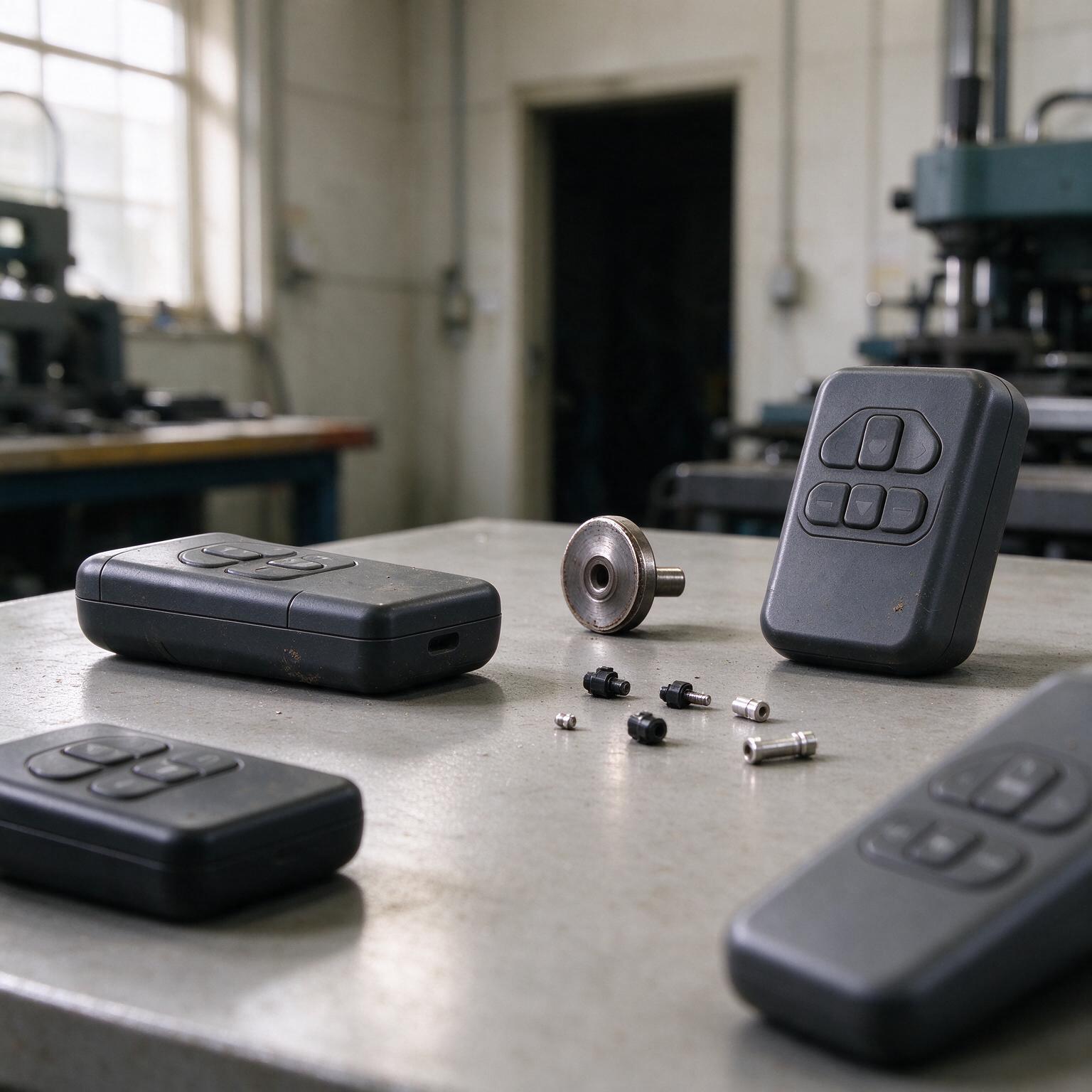
Context: one SMT line, roughly 70 live SKUs, and a quoted lead time of 38 days
A mid-sized contract manufacturer of aftermarket remote controls — about 60 staff, one SMT line feeding a manual assembly and test area — was quoting 38 days on standard repeat orders. The product mix explains most of it: around 70 active SKUs, batches averaging a few hundred units, and customers who reorder the same two or three models every quarter. Nothing exotic here. No high-mix engineering shop, barely any prototype work. Just a factory that had been configured, more by accident than design, for a different scale than the one it was actually serving.
This shape is common in the remote control ODM space. The business grew by adding SKUs faster than it added process. Each new keypad layout, housing and IR code set is small in itself; seventy of them on one line is not. Nobody sat down and decided on 38 days. It was the sum of five separate waits, and none of them looked alarming on its own.
Where the 38 days actually went

Breaking the quoted figure into its parts was the first useful thing the operation did, and the result was unflattering. No single stage ate more than about a third of the total. That is exactly why the problem had persisted — anyone looking at one stage could argue it was roughly reasonable. The damage came from the queue in front of each stage compounding with the next.
| Stage | Typical elapsed share | What sat in the queue |
|---|---|---|
| Order queue before scheduling | ~5–7 days | Orders waiting for a slot to be allocated by hand |
| Material wait | ~9–11 days | Housings, PCBs and keypads ordered per batch, not per family |
| SMT changeover | ~4–6 days cumulative | Stencil and feeder swaps between unrelated boards |
| Assembly and test | ~8–10 days | Single test station, batches queued behind each other |
| Dispatch and paperwork | ~2–3 days | Final check, packing, documentation |
The material wait is the one worth dwelling on. Housings and boards were bought against confirmed batches rather than against a family of products, so every order started its own purchasing clock. A batch of 400 units waited the same nine or ten days a batch of 4,000 would have, because the constraint was the purchase order cycle, not the quantity. That cost per unit falls hardest on small batches — which was the entire book of business.
SMT changeover told a similar story. Switching between boards that shared a stencil family still triggered a full line stop and feeder verification, because nothing in the schedule recognised the relationship. The line ran in order of order receipt, not in order of similarity. In effect it was paying a changeover penalty for work it did not need to separate.
What was actually done, and what each choice cost
1. Freeze a changeover sequence and batch by stencil family
The line moved from first-in-first-out to a fixed weekly sequence, with boards grouped by stencil and feeder setup. The reasoning is simple: changeover cost is mostly fixed per event, so fewer events means a lower total. Batching by family let several SKUs share one setup instead of each paying for its own.
The cost was real. Some orders now wait up to a week for their family's slot rather than entering the line immediately. When a customer has a hard deadline, that wait has to be negotiated or bought out with an exception — and exceptions erode the whole point. The operation accepted this because the queue was already five to seven days; all it did was move from an invisible queue to a visible one.
2. Hold a small buffer of common housings and PCBs
Instead of stocking finished goods, the factory carried a modest buffer of the housings and bare boards shared across the top-selling families — enough for roughly two weeks of average demand on those items, no more. The logic: material wait was the largest single component of the remote control lead time, and most of it was purchasing cycle rather than actual production.
This ties up working capital and carries its own risk. Housings for a discontinued model become scrap. So the buffer was deliberately limited to families with a steady reorder history and reviewed every quarter, with anything that had not moved in two cycles pushed out. That review discipline is not optional. Skip it and the buffer quietly turns into dead stock, and you have an inventory problem instead of a lead-time fix.
3. Two-station parallel test with a shared fixture
Final test was a single bench, and every batch queued behind it. The change was to run two test stations in parallel sharing one fixture design, so a batch splits across both and test time per batch roughly halves at the queue level. A shared fixture keeps setup and calibration work in one place rather than duplicating it.
This only makes sense above a certain batch size. Two stations sit idle half the time on very small batches, and the second set of test equipment has to be justified against the volume it actually clears. The operation ran the numbers on its own mix before committing. A shop with batches of fifty units should not copy this step.
4. Quote from a capacity calendar, not a rule of thumb
The old 38-day figure was a fixed number applied to every order. It was replaced with dates derived from a simple capacity calendar: known line slots, known buffer availability, known test capacity. The quoted date is now built up from those inputs rather than asserted.
Cheapest of the four changes, and the hardest to sustain, because it needs someone to keep the calendar current. A stale calendar is worse than a rule of thumb — it produces confident wrong dates. The operation gave the update to one person and made it a daily task. That is a real labour cost, even if it never shows up on a capital budget.
The result over two quarters
Across two quarters, the quoted remote control lead time on repeat SKUs came down from 38 days to about 21. The improvement was not uniform, and it is worth being precise about where it landed. Repeat orders on buffered families saw the full benefit. First-run parts — new keypad layouts, new housings, anything needing a fresh tooling or sourcing cycle — moved far less, because their constraint was never the queue.
Long-tail variants, the slow movers ordered once or twice a year, improved only marginally too. They still wait for a family slot, and they still trigger a purchasing cycle if their parts are not buffered. The honest summary: the operation fixed the part of the problem that was self-inflicted — scheduling and inventory policy — and left untouched the part inherent to low-volume custom work.
Note what is not claimed here. No certification was gained, no headcount was added or removed, and the figures above are the operation's own internal measurements over two quarters, not an audited benchmark. A different mix would produce different numbers.
What transfers, and what does not
The sequencing logic travels well. Any low-volume, high-mix operation running one line is probably paying changeover costs it does not need to pay, simply because its schedule reflects order arrival rather than product similarity. Grouping by shared setup and accepting a short, visible wait is a policy change, not a capital purchase — and you can reverse it if it does not work.
The buffer logic transfers too, with a condition: it only works where reorder history is genuinely steady. A shop with spiky demand, or where one customer dictates the schedule week to week, will find the buffer either too small to help or too large to justify. In that setting the calendar discipline collapses first, because the calendar cannot predict a schedule someone else controls.
What does not transfer is the test rig economics. Two parallel stations paid for themselves here because batch sizes were a few hundred units and test was a genuine bottleneck. At fifty units a batch, or where test is already fast relative to assembly, the second station is idle capital. Same caution for the capacity calendar: it needs a person who owns it daily, and a small operation without that spare attention should fix sequencing first and stop there.
If you are weighing a similar change and want to talk through where your mix sits, the team at Serow Controls in Shenzhen answers enquiries at peter.sun@serow-tech.com, typically within one working day. Bring your batch sizes and your SKU count; those two numbers decide most of the answer.
More from the newsroom
Keep reading.
Three other notes from the same team.
Start a project
Send the control target, not a catalogue request.
Tell us what the remote has to control, which radio the installed base uses, and where it ships. We will reply with the questions that decide the architecture.